Words to Pages Calculator
How many pages your words make in a printed book, measured on real typeset pages.
- Measured on typeset books
- 8 trim sizes
- Manuscript pages too
Word count
Counted in
Kind of text
Trim size
Book language
Text size
Chapters
Each starts on a new page
Printed pages
≈ 198 pages
172–228 pages, from dense prose to lots of dialogue
417 words on a full page
- Manuscript pages
- 320 double-spaced
- Where this length sits
- Adult novel, the safest range
Get the exact count for your own book
Write or import it in Story-AI's book mode: its Publish step typesets the whole book at your trim and shows the real page count and spine width.
How Many Words per Page in a Book?
Measured on our typesetter: 8 trims, 3 kinds of text, standard text size.
A printed page of an English novel holds about 290 to 485 words at a standard text size: about 290 on a 5 × 8 page full of dialogue, 485 on a 6 × 9 page of dense prose. A typical novel fits about 323 words on 5 × 8 and 417 on 6 × 9.
These are our own measurements: full pages of 21 public-domain samples typeset on Story-AI's typesetter at every trim and text size. At the standard size, a 6 × 9 page holds 361 words with lots of dialogue, 417 in a typical novel and 485 in dense prose. Every words to pages result on this page starts from these numbers.
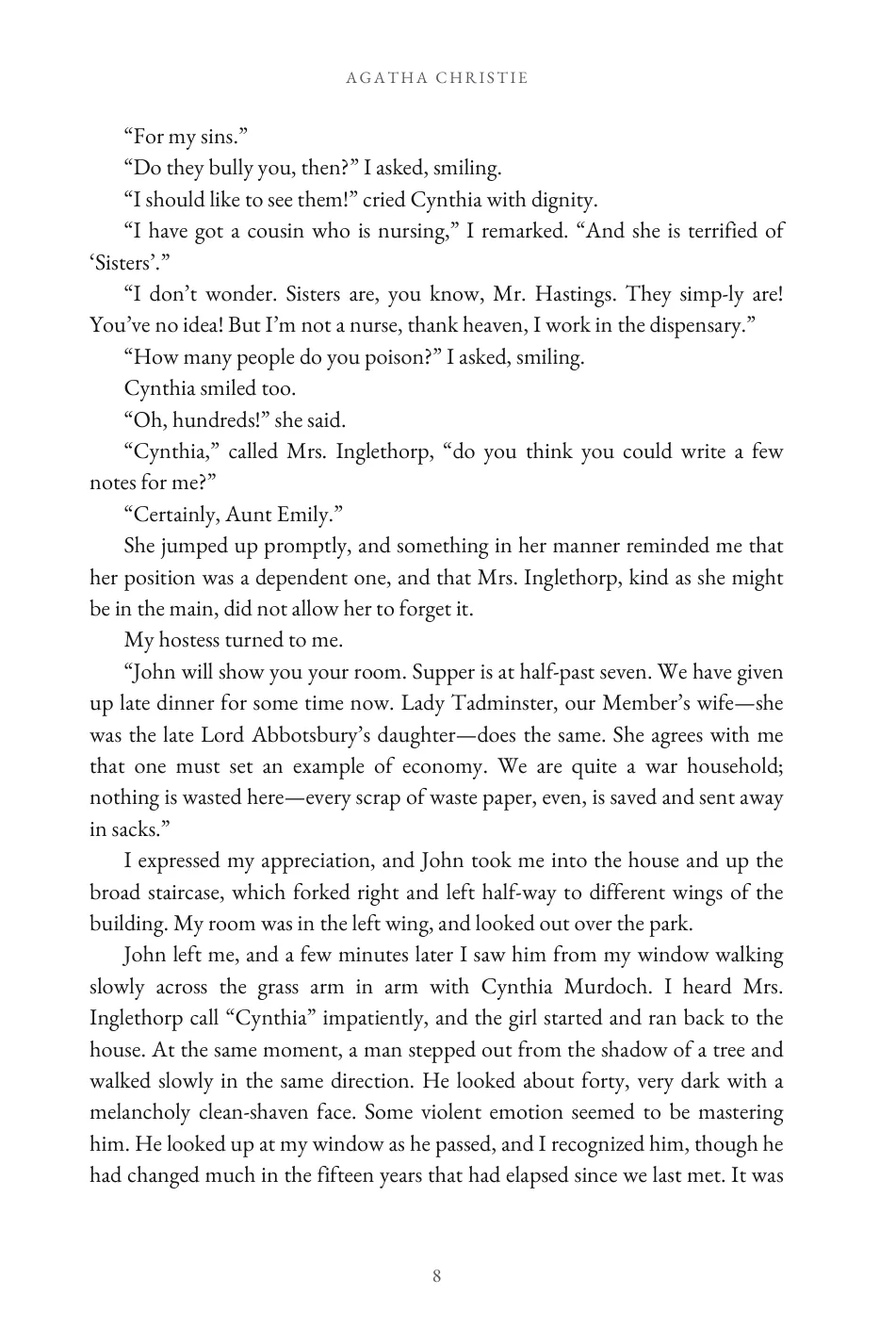
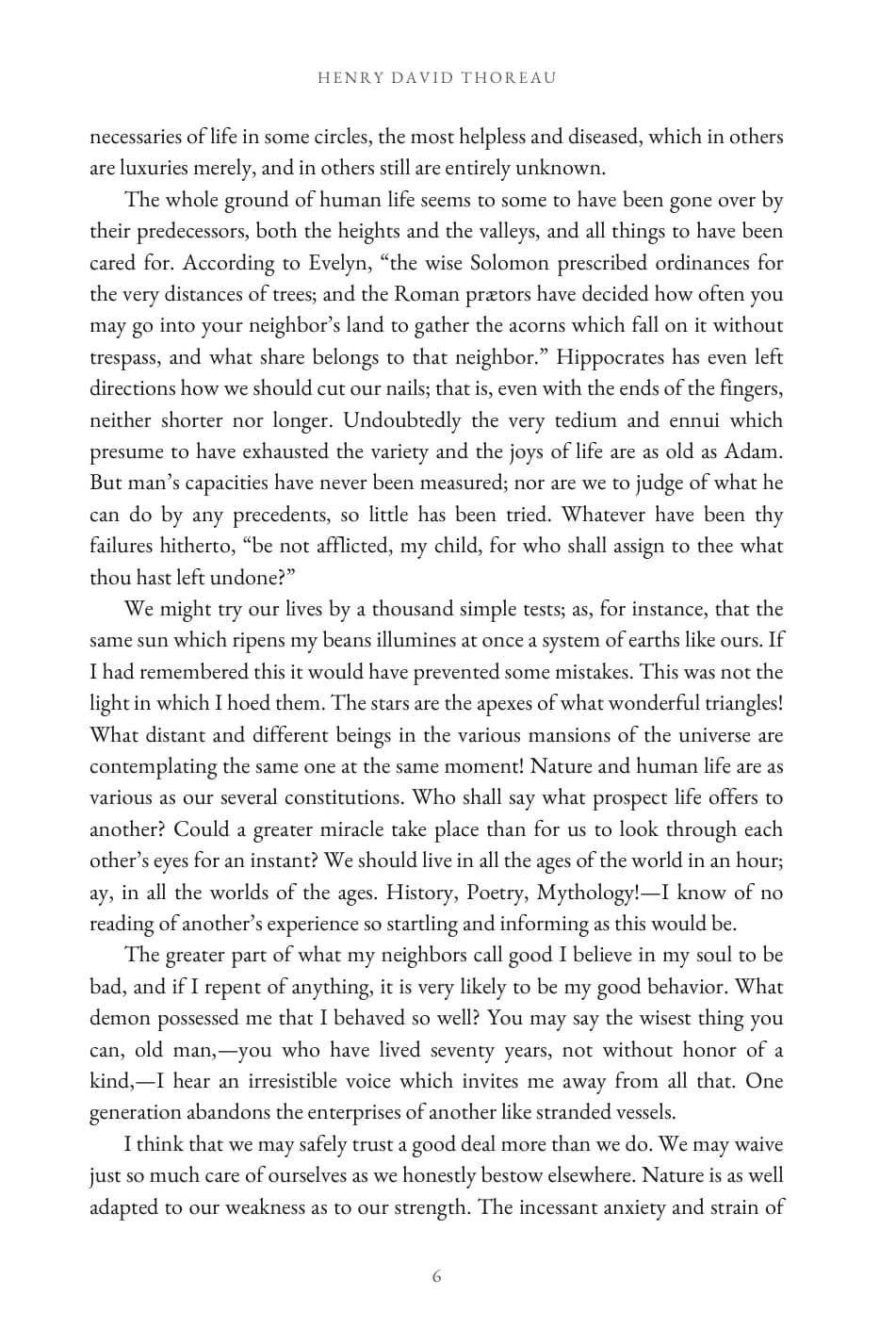
The kind of text depends on paragraph length, not genre. Under about 36 words a paragraph on average, as in The Mysterious Affair at Styles (22 words), is lots of dialogue: short lines leave white space at their ends. 36–105 words is a typical novel; over 105, as in Walden (190 words), is dense prose.
For comparison, Kindlepreneur's survey of more than 900 authors found books on Amazon average 280 words per page for fiction and 233 for non-fiction. An average over a whole book also counts front matter, chapter openings and part-empty pages, so it runs below what a full page holds.
| Trim (in) | Lots of dialogue | Typical novel | Dense prose |
|---|---|---|---|
| 5 × 8 | 290 | 323 | 371 |
| 5.06 × 7.81 | 282 | 318 | 366 |
| 5.25 × 8 | 305 | 344 | 399 |
| 5.5 × 8.5 | 308 | 349 | 404 |
| 6 × 9 | 361 | 417 | 485 |
| 6.14 × 9.21 | 380 | 440 | 512 |
| 7 × 10 | 438 | 521 | 607 |
| 8.5 × 11 | 542 | 660 | 791 |
Full text pages of a book up to 300 pages. Longer books lose 2 % to 8 % a page to KDP's wider inside margin. The other text sizes and 6 more languages are in the words to pages calculator above.
How to Convert Words to Pages in 4 Steps
Word count to pages by hand, the same arithmetic the calculator runs.
- 1
Count the words
Take the count from your word processor. If you count characters, divide by the characters per word of your language: we measured 5.75 with spaces (4.76 without) in a typical English novel. The calculator does this for 7 languages.
- 2
Find your words per page
Look up your trim, text size and kind of text in the table above: a typical novel at 6 × 9 and the standard size fits 417 words a page. Judge the kind of text by your average paragraph length.
- 3
Divide to get text pages
Words ÷ words per page = text pages. Past 300 pages, KDP's wider inside margin shortens every line, so divide by a little less: 2 % less past 300, 6 % past 500 and 8 % past 700.
- 4
Add chapters and front matter
Each chapter starts on a new page and ends part-empty, adding 0.81 to 1.03 of a page by trim and size (0.9 in the example below). A title page, copyright page, dedication and contents add 6. Round up to an even number, as KDP does.
Pages = words ÷ words per page + chapters × 0.9 + 6, rounded up to an even number
How Many Pages Is 50,000, 80,000 or 100,000 Words?
A words to pages chart for book-length counts at three trims, with manuscript pages.
The word counts people search for most, from 10,000 to 200,000. A 50,000-word book is 156 text pages at 5 × 8 and 120 at 6 × 9. 80,000 words make 248 and 192; 100,000 words, 318 and 240.
| Words | 5 × 8 | 5.5 × 8.5 | 6 × 9 | Manuscript (double-spaced) |
|---|---|---|---|---|
| 10,000 | 32 | 30 | 24 | 40 |
| 20,000 | 62 | 58 | 48 | 80 |
| 30,000 | 94 | 86 | 72 | 120 |
| 40,000 | 124 | 116 | 96 | 160 |
| 50,000 | 156 | 144 | 120 | 200 |
| 60,000 | 186 | 172 | 144 | 240 |
| 70,000 | 218 | 202 | 168 | 280 |
| 75,000 | 234 | 216 | 180 | 300 |
| 80,000 | 248 | 230 | 192 | 320 |
| 85,000 | 264 | 244 | 204 | 340 |
| 90,000 | 280 | 258 | 216 | 360 |
| 95,000 | 296 | 274 | 228 | 380 |
| 100,000 | 318 | 288 | 240 | 400 |
| 120,000 | 382 | 354 | 288 | 480 |
| 150,000 | 476 | 442 | 370 | 600 |
| 200,000 | 656 | 608 | 492 | 800 |
Text pages only. Chapter openings add about 0.81–0.96 of a page each at these trims and front matter 6 pages, so 80,000 words in 30 chapters come to 226 pages at 6 × 9, not 192. Lots of dialogue makes more pages, dense prose fewer.
Words to Pages for Manuscripts and Essays: the 250-Word Rule
Words per page double-spaced, 1.5-spaced and single-spaced.
The 250 words per page rule comes from typewriters. Ten characters took up exactly an inch and a double-spaced page held about 25 lines, so a manuscript page came to roughly 250 words (William Shunn). It describes a typed manuscript, not a printed book.
Publishers today use the computer's word count, not the old estimate (Shunn). Even in Courier 12, he notes, 480 manuscript pages can hold 120,000 to 140,000 words (Word count vs. page count). For a book, the word count is the number that matters.
For essays and school papers, words to pages works the same way, scaled by line spacing: 333 words a page at 1.5 spacing, 500 single-spaced. A 1,000-word essay is 4 pages double-spaced, 3 at 1.5 spacing and 2 single-spaced.
These are conventions, not measurements: a proportional font such as Times New Roman fits more words on a line than a typewriter did, so your document may come out a little shorter.
| Words | Single-spaced | 1.5-spaced | Double-spaced |
|---|---|---|---|
| 500 | 1 | 1.5 | 2 |
| 1,000 | 2 | 3 | 4 |
| 1,500 | 3 | 4.5 | 6 |
| 2,000 | 4 | 6 | 8 |
| 2,500 | 5 | 7.5 | 10 |
| 3,000 | 6 | 9 | 12 |
| 4,000 | 8 | 12 | 16 |
| 5,000 | 10 | 15 | 20 |
Pages to Words: How Many Words Is a 200-, 300- or 400-Page Book?
Words to pages in reverse, for the page count you're aiming at.
At 6 × 9, 83,400 words fill 200 text pages of a typical novel, 125,100 fill 300 and 162,700 fill 400. At 5 × 8 the same pages hold 64,600, 96,900 and 126,000. The calculator's Pages to words switch does this for any setting.
| Pages | 5 × 8 | 5.5 × 8.5 | 6 × 9 |
|---|---|---|---|
| 100 | 32,300 | 34,900 | 41,700 |
| 150 | 48,400 | 52,300 | 62,500 |
| 200 | 64,600 | 69,800 | 83,400 |
| 250 | 80,700 | 87,200 | 104,200 |
| 300 | 96,900 | 104,700 | 125,100 |
| 350 | 110,300 | 119,200 | 142,400 |
| 400 | 126,000 | 136,200 | 162,700 |
| 500 | 157,600 | 170,300 | 203,400 |
A finished book holds fewer words than its page count suggests, because chapter openings and front matter take pages too: a 300-page 6 × 9 novel in 30 chapters, with front matter, holds about 111,300 words. Past 300 pages the table allows for KDP's wider gutter.
How Long Is a Novel? Word Counts by Genre
Agent guidance from Writer's Digest and SFWA's award categories, with the pages they fill.
Agents judge a manuscript by its word count. Writer's Digest gives the ranges below for novels and children's books, and SFWA defines the shorter forms for the Nebula Awards. The pages come from our words to pages tables: text pages of a typical novel at 6 × 9, standard size. At 5 × 8, add about 29 %.
Adult fiction
80,000–89,999 words is "a 100% safe range" for literary, mainstream, women's, romance, mystery, suspense, thriller and horror; 71,000–109,000 can work. That's 192–216 pages, or 172–262 for the wider range.
Science fiction and fantasy
100,000–115,000 words is "an excellent range", about 240–276 pages. In the other adult genres, Writer's Digest calls 110,000 words or more too long.
Young adult
55,000–79,999 words is "a great range", about 132–192 pages.
Middle grade
20,000–55,000 words, about 48–132 pages. For a younger reader's book, try the Large text size in the calculator: it adds about 18 % to the page count.
Short stories to novellas
By SFWA's rules a short story is under 7,500 words, a novelette 7,500–17,499, a novella 17,500–39,999 and a novel 40,000 or more. Story-AI's short story generator writes short stories from an idea.
Picture books
"500-600 words is a good number," says Writer's Digest; closer to 1,000, editors and agents may shy away. A picture book's pages are set by its illustrations, so words to pages doesn't apply.
Short of your target? The story continuer writes the next part of a story you paste or have saved, so a story grows one part at a time.
What Changes Words to Pages: Dialogue, Trim, Font and Size
The same words can fill very different page counts.
Take 80,000 words. As text pages they fill 166 at 6 × 9 in dense prose and 276 at 5 × 8 with lots of dialogue: 66 % more paper for the same words. These are the settings that move a words to pages result, each measured.
Paragraph length
Dialogue in short paragraphs leaves the end of many lines empty. At the same trim and size, a page holds 361 words with lots of dialogue and 485 in dense prose, 34 % more. Your average paragraph length tells you which applies.
Trim size
A 6 × 9 page fits 417 words of a typical novel and a 5 × 8 page 323, so the smaller trim runs 29 % more pages. 5.5 × 8.5 sits between, at 349.
Text size
A typical novel fits 461 words a page in Small, 417 in Standard and 352 in Large: Large adds 18 % to the page count. These are the three sizes book mode's typesetter offers.
Font
Fonts at the same point size differ in width. Of our 6 body fonts, EB Garamond fits the most words and Libre Baskerville the fewest: the same book runs 32 % more pages in Libre Baskerville. The table below has all 6.
Chapters and front matter
Each chapter adds 0.81–1.03 of a page: its opening starts lower and its last page is part empty. 30 chapters add about 27 pages; the title, copyright, dedication and contents pages add 6.
Book length
KDP asks for a wider inside margin as a book grows, so lines get shorter: a page holds 2 % fewer words past 300 pages, 6 % past 500 and 8 % past 700. We measured each step on the typesetter.
Language
Longer words fill lines faster. Where a page of a typical novel fits 417 English words, it fits 362 German and 322 Turkish ones. Pick your book's language in the calculator: each has its own samples.
What isn't measured
Images, tables, subheadings and back matter such as notes or an index aren't in our samples. Add the pages they take, or typeset the book itself for the exact count.
Two typeset pages: lots of dialogue and dense prose
| Body font | Words per page |
|---|---|
| EB Garamond | 417 |
| Crimson Pro | 400 |
| Libre Baskerville | 317 |
| Lora | 346 |
| Literata | 338 |
| Source Serif 4 | 342 |
Kindle Pages and KENP
What Amazon says about eBook page counts, and what it doesn't.
An eBook has no fixed pages: each reader picks the font and size, so the words on a screen change. That's why this words to pages calculator works with print trims and gives no Kindle page count.
For Kindle+ (Amazon's reading subscription, formerly Kindle Unlimited), Amazon counts Kindle Edition Normalized Pages (KENP), made "to determine a Kindle eBook's page count in a way that works across formats, genres, devices, and display settings" (KDP help: KENP). They are calculated with standard formatting settings such as font, line height and line spacing, and images count.
KDP counts at most 3,000 KENP read per title per customer. Amazon publishes no number of words per KENP, so we don't estimate one; ratios quoted online aren't Amazon's.
Page Count on KDP: Limits, Spine Width and Print Cost
Take your words to pages result to KDP: the page limits, the spine and the printing cost.
KDP prints paperbacks from 24 pages (72 in standard color). Most trims take up to 828 pages on white paper and 776 on cream, 8.5 × 11 up to 590 on white; standard color stops at 600 and hardcovers run 75 to 550 (KDP help: Print options, Trim size). Every count is rounded up to an even number.
The spine is the page count times the paper's thickness: 0.002252 in a page on white, 0.0025 in on cream (KDP help: Cover). Our 226-page example gets a 0.509 in spine on white and 0.565 in on cream. KDP allows spine text from 80 pages.
Printing cost follows the page count too. On Amazon.com, a black-ink paperback in a regular trim costs $2.30 up to 110 pages, then $1.00 plus $0.012 a page (KDP help: Printing cost, checked November 2, 2026). The 226-page example costs $3.71 to print; large trims cost more.
The calculator above shows the spine for its result on white and cream and warns when a count is over KDP's maximum for the trim or under 24 pages. For the full cover size and a template, take the page count to the KDP cover calculator.
How We Measured Words per Page
Typeset, counted and checked on November 2, 2026.
We typeset 21 public-domain samples on Story-AI's own book typesetter, the one behind book mode's Publish step: 3 kinds of text in each of 7 languages, about 24,000 words each (one has 17,359). Theme Classic, body font EB Garamond, chapters on any page, no images.
Each sample was set at all 8 trims and 3 text sizes, whole and as its two halves. Body pages are twice the whole minus both halves, so the title page, the chapter opening and the last page's empty part cancel out. Pages are counted to the line.
Chapter openings, front matter, the 6 fonts and KDP's wider gutter past 300 pages were measured separately. Characters per word come from the same samples, so a character count converts by your book's language, not by a fixed 5 or 6.
Then we checked the method on 3 whole books, typeset with their real chapters and front matter. The words to pages prediction came within 3.3 % of the typeset count each time: Pride and Prejudice, 121,557 words in 61 chapters, was predicted at 360 pages and typeset at 350.
Three books are a small check. A book with many very short chapters, headings, lists, verse or images can differ more. Our typesetter doesn't hyphenate, either: a line that would stretch too far stays ragged, so a book set with hyphenation may fit a little more on each page. For your own manuscript, typeset the book itself, as below.
| Language | Kind of text | Sample | Words |
|---|---|---|---|
| English | Lots of dialogue | The Mysterious Affair at Styles, Agatha Christie | 24,048 |
| English | Typical novel | The Age of Innocence, Edith Wharton | 24,012 |
| English | Dense prose | Walden, Henry David Thoreau | 24,327 |
| German | Lots of dialogue | Die kleine Stadt, Heinrich Mann | 24,018 |
| German | Typical novel | Buddenbrooks, Thomas Mann | 24,035 |
| German | Dense prose | Der Prozess, Franz Kafka | 24,173 |
| French | Lots of dialogue | Le Comte de Monte-Cristo (tome I), Alexandre Dumas | 24,018 |
| French | Typical novel | Germinal, Émile Zola | 24,035 |
| French | Dense prose | Du côté de chez Swann, Marcel Proust | 24,031 |
| Spanish | Lots of dialogue | Niebla, Miguel de Unamuno | 24,012 |
| Spanish | Typical novel | Los cuatro jinetes del Apocalipsis, Vicente Blasco Ibáñez | 24,081 |
| Spanish | Dense prose | Del sentimiento trágico de la vida, Miguel de Unamuno | 24,013 |
| Portuguese | Lots of dialogue | A Intrusa, Júlia Lopes de Almeida | 24,063 |
| Portuguese | Typical novel | O Cortiço, Aluísio Azevedo | 24,003 |
| Portuguese | Dense prose | Minha formação, Joaquim Nabuco | 24,010 |
| Turkish | Lots of dialogue | Hikayeler (seçme), Ömer Seyfettin | 24,027 |
| Turkish | Typical novel | Aşk-ı Memnu (1.–3. bölüm), Halit Ziya Uşaklıgil | 17,359 |
| Turkish | Dense prose | Nutuk, Mustafa Kemal Atatürk | 24,122 |
| Japanese | Lots of dialogue | 吾輩は猫である, 夏目漱石 | 24,013 |
| Japanese | Typical novel | 三四郎, 夏目漱石 | 24,026 |
| Japanese | Dense prose | 古寺巡礼, 和辻哲郎 | 24,063 |
| Book | Typeset pages | Predicted | Error |
|---|---|---|---|
| Pride and Prejudice | 350 | 360 | 2.9% |
| Frau Jenny Treibel | 180 | 186 | 3.3% |
| 坊っちゃん | 134 | 135 | 0.7% |
From Words to Pages to a Finished Book
The calculator estimates; typesetting your own book gives the exact number.
A words to pages estimate gets you close; your own book gives the exact count. In Story-AI's book mode, the Publish step typesets the whole book at your trim, font and text size and shows its page count and spine width. That check is free on every plan.
Write the book there chapter by chapter, or import a Word draft: 1 credit per started 3,000 words, so an 80,000-word draft costs 27 credits. Book mode needs a free account; this calculator doesn't.
A watermarked preview of the first two chapters is free. The print interior PDF, wrap cover, EPUB and ebook cover unlock once per book for 60 credits on the Premium and Professional plans, or with a Plus, Pro or Max credit pack. You upload the files to KDP yourself.
Start your bookWords to Pages FAQ
How many pages is 80,000 words?
About 192 text pages at 6 × 9, 230 at 5.5 × 8.5 and 248 at 5 × 8 for a typical English novel. With 30 chapters and front matter, the first figure becomes 226 (198–256, dense prose to lots of dialogue). As a manuscript, 320 double-spaced pages. Published estimates run from 192 to 333 printed pages.
How many words per page are in a book?
In our measurements a full page of a typical English novel holds 323 words at 5 × 8 and 417 at 6 × 9, standard size. Lots of dialogue fits fewer (290 and 361), dense prose more (371 and 485). Kindlepreneur's author survey found 280 words per page for fiction on Amazon, averaged over whole books.
Where does the 250 words per page rule come from?
From typewriters: ten characters took up an inch and a double-spaced page held about 25 lines, so a manuscript page came to about 250 words (William Shunn). Publishers now use the computer's word count instead.
Why does Word show a different page count?
A Word page is letter or A4 paper. Single-spaced it holds roughly 500 words, more than a typical novel page; double-spaced, about 250, fewer than any English book page we measured at the standard size (282 and up). Every chapter of a book also starts a new page. Convert words to pages, not Word pages to book pages.
How many pages is 50,000 words?
About 120 text pages at 6 × 9, 144 at 5.5 × 8.5 and 156 at 5 × 8 for a typical English novel. With 20 chapters and front matter, the first figure becomes 144. As a double-spaced manuscript, 200 pages. By SFWA's rules, 50,000 words is a novel.
How many words is a 300-page book?
At 6 × 9, about 125,100 words fill 300 text pages of a typical English novel; 104,700 at 5.5 × 8.5 and 96,900 at 5 × 8. With 30 chapters and front matter, the first figure drops to about 111,300. Lots of dialogue fits fewer words, dense prose more.
How long should a novel be?
Writer's Digest calls 80,000–89,999 words the safest range for most adult fiction, with 71,000–109,000 possible; science fiction and fantasy 100,000–115,000, young adult 55,000–79,999, middle grade 20,000–55,000. SFWA counts 40,000 words or more as a novel.
What's the minimum and maximum page count on KDP?
Paperbacks need 24 pages, 72 in standard color. The maximum is 828 on white paper and 776 on cream for most trims, fewer for the largest; standard color stops at 600. Hardcovers run 75 to 550 pages. KDP rounds every count up to an even number.
Does the page count change the printing cost?
Yes. On Amazon.com a black-ink paperback in a regular trim costs $2.30 up to 110 pages, then $1.00 plus $0.012 a page (checked November 2, 2026): $4.60 for 300 pages. Each page also widens the spine, by 0.002252 in on white paper.
How many pages is my Kindle book?
There is no fixed number: readers choose the font size. For Kindle+, formerly Kindle Unlimited, Amazon counts Kindle Edition Normalized Pages (KENP) with standard formatting settings, images included. Amazon doesn't publish how many words make a KENP, so we don't estimate it.
Does the font change the page count?
Yes. For a typical novel at the standard size we measured 417 words a page in EB Garamond and 317 in Libre Baskerville: the same book runs about 32 % more pages in the wider font. Crimson Pro, Lora, Literata and Source Serif 4 fall between.
How long is a picture book?
Writer's Digest calls 500–600 words a good number; closer to 1,000, editors and agents may shy away. Its page count is set by the illustrations, not the words, so a words to pages calculator doesn't apply.
Sources
- William Shunn: The old rule of thumb for estimating word count is obsolete and Word count vs. page count: the 250-word rule and manuscript pages.
- Kindlepreneur: How many words per page in a book?: the survey of more than 900 authors.
- Writer's Digest: Word count for novels and children's books: lengths by genre.
- SFWA: Nebula rules: short story, novelette, novella and novel.
- KDP help: Print options, Trim size, bleed and margins, Cover and Paperback printing cost: page limits, spine width and print cost.
- KDP help: Kindle Edition Normalized Page: KENP.
- Samples: Project Gutenberg, Wikisource and Aozora Bunko, each linked in the samples table. Measured on November 2, 2026.
Sources were checked on November 2, 2026.