Write the Relationship, Not Just the Characters: Synastry for Storytellers
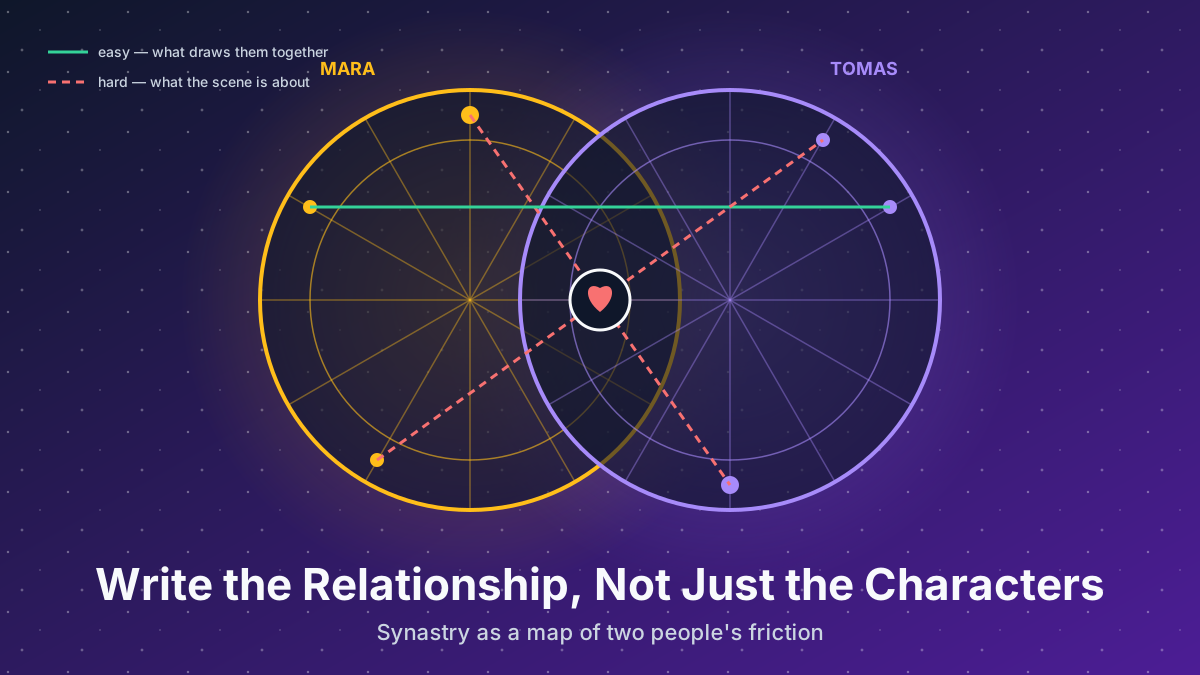
Two well-built characters do not automatically make a good scene together. Readers remember relationships — the specific way two people pull at each other — and that has to be designed as deliberately as either person. Synastry, the astrological practice of overlaying two birth charts, is a surprisingly useful template for doing exactly that. Here is how to borrow it without needing to believe a word of it.
The Relationship Is a Third Character
In our previous guide we gave a single character a birth chart and read its Sun, Moon and Rising as wants, needs and seems. Synastry asks the next question: when you lay Mara’s chart over her brother Tomas’s, where do the planets line up easily, and where do they clash? Those contact points — astrologers call them aspects — are a ready-made list of what the two of them will agree on without trying and what they will argue about forever.
That is precisely what a writer needs to know before putting two people in a scene. It works for siblings, rivals, partners, and a detective and their suspect just as well as for romance.
Step 1: Overlay the Two Charts
Take the birth details you already chose for each character and run them through a synastry calculator. We use SynastryChart: enter two sets of birth data and it draws the combined wheel and lists every cross-chart aspect with a short plain-language reading. For fiction you only need the list, not the wheel. Skim it and pull out three things: the strongest easyaspect, the strongest hard aspect, and any contact involving one character’s Moon — because the Moon is the need, and needs are what stories are about.
Tune it, don’t accept it. If the calculator says the pair is all harmony, change one birth time until a square appears. You are casting a relationship, not discovering one.
Step 2: Fill In the Relationship Map
Translate those three findings into three sentences. This is the whole deliverable — keep it next to the character sheets and reuse it in every prompt where the two appear together.
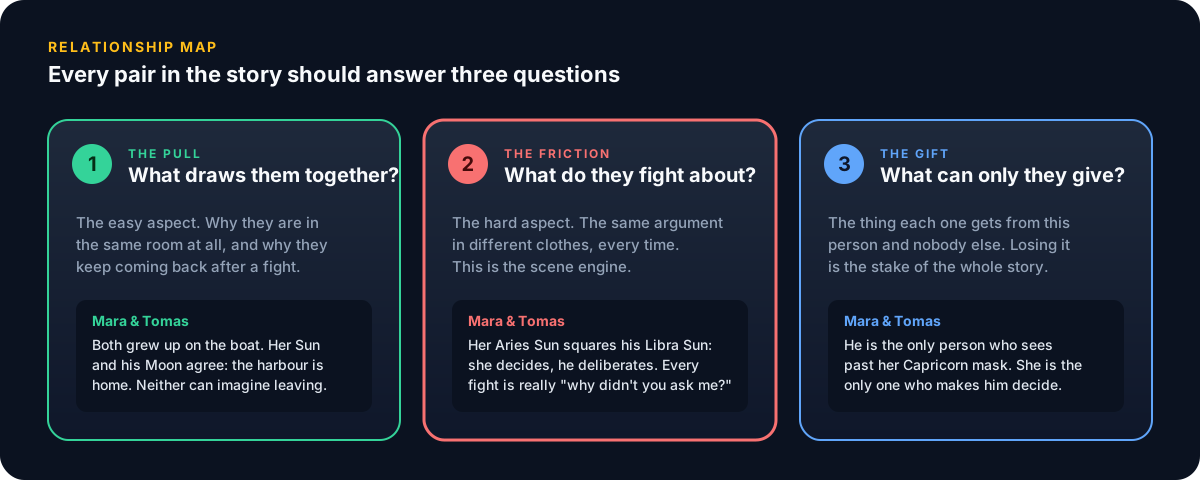
- The pull explains why they don't just walk away. Without it, the fights feel like the author holding them in the room.
- The friction should be one argument, not five. Readers recognise it on its second appearance and dread it on its third — that is tension.
- The gift is what is at stake. If either could get it elsewhere, the relationship has no weight.
- Do this for every pair that shares more than two scenes, including the ones who barely speak.
Step 3: Turn Aspects Into Scenes
There are only four kinds of contact that matter for our purposes, and each one is a kind of scene. Once you know which one a relationship mostly is, you know what its scenes should feel like — and which one to save for the climax.
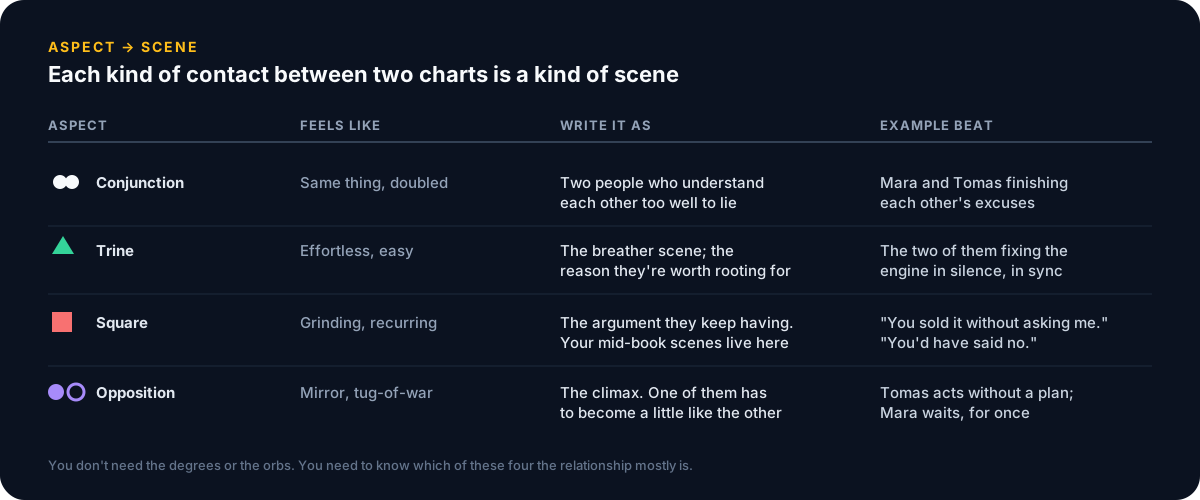
A useful shape for a whole story: open on a trine so we like them together, spend the middle on the square so we fear for them, and resolve on the opposition — the moment one of them borrows the other’s strength. Mara, who never waits, waits. Tomas, who never leaps, leaps. The relationship changed both of them, which is the only reason to write one.
Step 4: Prompt With the Pair, Not the People
When two mapped characters share a scene, give the story generator the relationship map and which aspect this scene is. The model then knows not just who these people are but what this particular conversation is for:
Mara (Aries Sun / Cancer Moon / Capricorn Rising) and her brother
Tomas (Libra Sun / Scorpio Moon).
Pull: both consider the harbour home.
Friction: she decides, he deliberates — every fight is "why didn't you ask me?"
Gift: he is the only one who sees past her mask; she is the only one who makes him act.

This is a SQUARE scene. Write them repairing the boat's engine while
the argument about selling it resurfaces for the third time. Neither
wins. End on the gift showing through, unspoken.
Writing a romance? Give the same three sentences to the love story generator, which writes the pair’s whole story around the trope you name.
Do
- Name the aspect for the scene. It sets the temperature better than any adjective.
- Let the friction stay unresolved in square scenes. Resolution is for the opposition.
- Show the gift through action, never through one character explaining it to the other.
Avoid
- Pasting the full aspect list into the prompt. Three sentences beat thirty lines.
- Making every pair a square. One high-friction relationship per story is plenty; the rest can be trines.
- Letting the chart decide the ending. It tells you the shape of the fight, not who wins it.
The Short Version
- Overlay the two characters’ charts with a synastry calculator such as synastrychart.org and pull out the strongest easy aspect, the strongest hard aspect, and any Moon contact.
- Write the relationship map: the pull, the friction, the gift — one sentence each.
- Treat conjunction, trine, square and opposition as four scene types; plan the story’s shape with them.
- Prompt every shared scene with the map plus the aspect it is.
Start with two characters you already have, or generate a pair with the AI story generator and map them afterwards.
About Story-AI Team
Story-AI is a small, independent product. These guides are written by the people who build it, from what we learn while making an AI story generator.
Continue Reading
How to Turn Your AI-Generated Story Into an Audiobook
A four-step text-to-speech workflow for writers: finish the draft, prepare a narration script, generate the voice, and publish chapter by chapter.
Character DevelopmentGive Every Character Their Own Voice: Multi-Voice Narration for AI Stories
How to cast, generate, and assemble a distinct AI voice for each character in your story, from a one-page casting sheet to a finished scene.
Ready to Create Your Own Stories?
Try Story-AI today and experience the future of AI-powered storytelling firsthand.