Give Your Characters a Birth Chart: Astrology as a Character-Building Tool
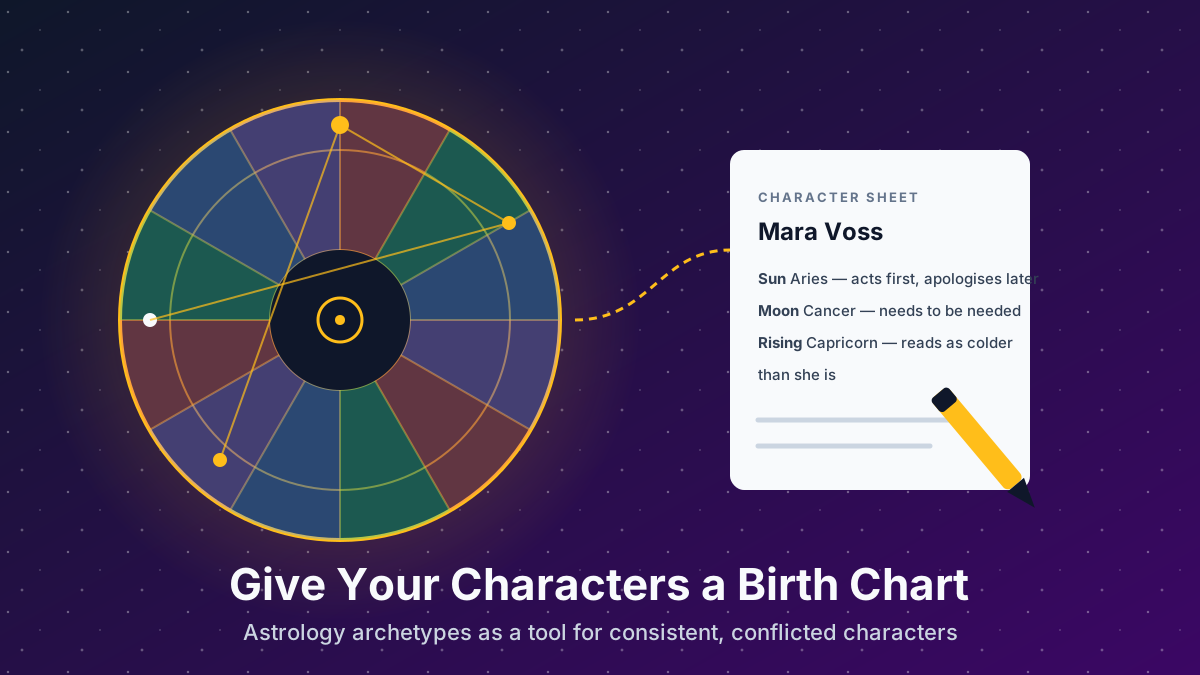
You don’t have to believe in astrology to use it. A birth chart is a two-thousand-year-old system for describing personality as a set of tensions — what someone wants versus what they need versus how they appear — and that is exactly the structure a fictional character needs. This guide shows how to generate a chart for a character, read the three placements that matter for fiction, and use the elements to engineer conflict between characters.
Why Writers Keep Coming Back to This
Most character questionnaires ask for facts: age, job, favourite food. Facts don’t generate scenes. A chart instead hands you a contradiction — a character whose core drive, emotional needs, and public face all pull in different directions — and contradictions are where plot comes from. It also gives you a vocabulary the AI understands: tell a story generator “an Aries Sun with a Cancer Moon” and it will write someone who charges in and then quietly needs reassurance, without you spelling either out.
Treat the signs as archetypes, the way you would use Jungian types or the Enneagram. The predictive claims are beside the point; the character vocabulary is remarkably good.
Step 1: Generate the Chart
A birth chart needs a date, a time, and a place. For a fictional character you get to choose all three — and choosing them is itself a useful exercise. Pick a birthday that gives the Sun sign you want; pick a time that gives an interesting Rising sign; pick the town where the story starts. Then put those into AstroChart, a free birth chart calculator that returns the full wheel along with a plain-English reading of each placement — which is the part you actually want as a writer. Copy the Sun, Moon, and Rising lines into your character sheet and ignore the rest for now.
Don’t pick your own sign for the hero. It is the most common mistake and it produces a self-insert. Roll a random date if you have to.
Step 2: Read the Big Three as Writing Questions
A full chart has ten planets and twelve houses. For fiction, three placements do almost all the work, and each one maps onto a question you would have to answer anyway.
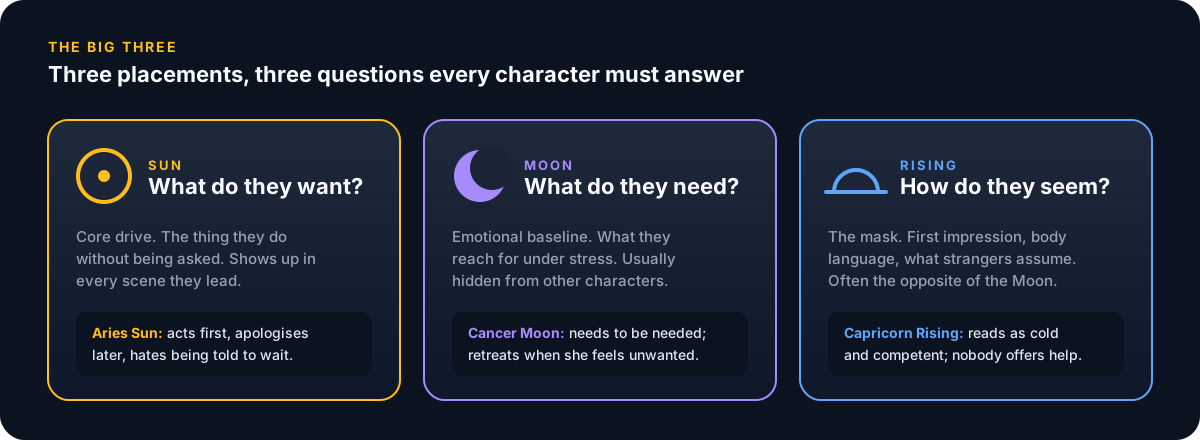
The gap between the three is the character. Mara Voss above wants to act (Aries), needs to be needed (Cancer), and appears self-sufficient (Capricorn). So she rushes in to help, nobody thanks her because she looks like she doesn’t care, and she goes home hurt and does it again tomorrow. That is a character arc in three lines, and you have not written a word of backstory yet.
- Sun drives what the character does in scenes they lead.
- Moon drives what they do when the plan fails — the reaction, not the action.
- Rising drives what other characters get wrong about them, which is where misunderstandings and dramatic irony come from.
- If all three land in the same element, you have written someone consistent and dull. Change the birth time.
Step 3: Cast the Rest of the Story by Element
The twelve signs group into four elements: Fire (Aries, Leo, Sagittarius), Earth (Taurus, Virgo, Capricorn), Air (Gemini, Libra, Aquarius) and Water (Cancer, Scorpio, Pisces). Once the hero has an element, casting the supporting characters becomes a question of which frictions you want in the room.
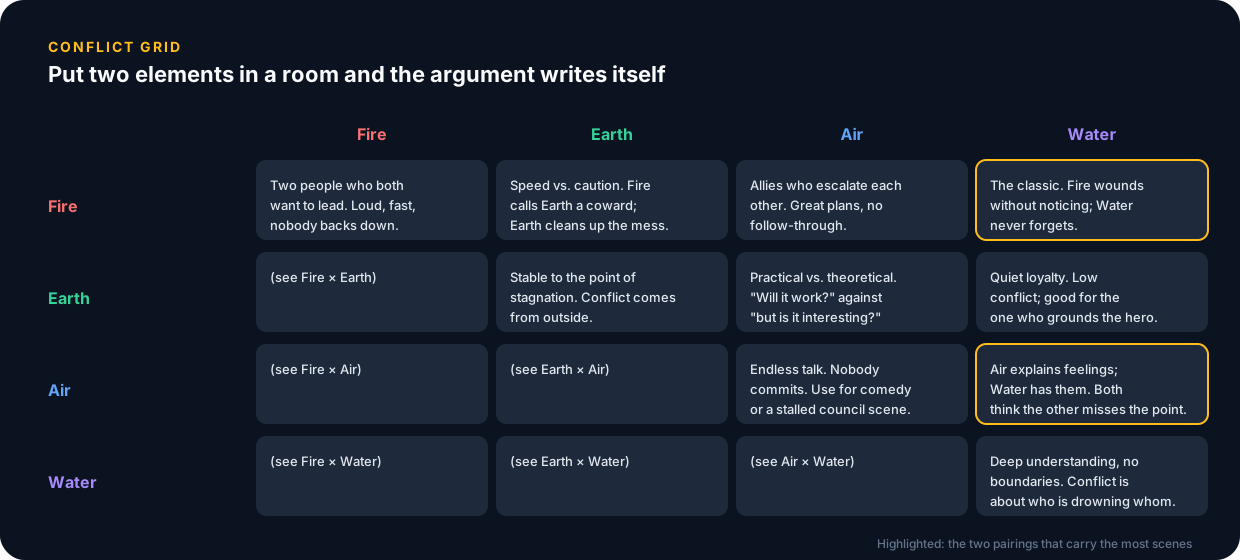
A useful default cast: a Fire hero, a Water character they keep accidentally hurting, an Earth character who cleans up after them, and an Air antagonist who is never quite wrong. Swap the hero’s element and the same four roles produce a completely different story.
Step 4: Put It in the Prompt
Language models have read a great deal of astrology, so the placements work as compressed character direction. Instead of a paragraph of traits, a prompt line looks like this:
Protagonist: Mara Voss, 34, harbour pilot.
Aries Sun, Cancer Moon, Capricorn Rising — acts before thinking,
secretly needs to be needed, comes across as cold and competent.
Antagonist: her brother Tomas. Libra Sun, Scorpio Moon — reasonable
in public, keeps score in private.
Write the scene where he tells her the family boat is being sold.
Do
- Pair each placement with one behaviour in plain words, as above. The sign is shorthand; the behaviour is the instruction.
- Keep the chart in the character sheet and reuse the same line in every prompt for that character.
- Let the Moon show only in private scenes. Readers should discover it.
Avoid
- Naming the sign in the story itself unless the character is into astrology. It reads as a label, not a person.
- Ten-planet dumps in the prompt. Beyond the big three the model starts averaging the traits together.
- Using the chart as an excuse. “She’s a Scorpio” is not a motive; what she wants in this scene is.
The Short Version
- Pick a birth date, time and place for the character and generate the chart with a calculator such as astrochart.co.
- Read Sun as wants, Moon as needs, Rising as seems. The gaps between them are the arc.
- Cast the supporting characters by element to get the frictions you want.
- Put the big three plus one behaviour each into the prompt, and keep it out of the prose.
For the broader craft of character work, see Building Compelling Characters.
About Story-AI Team
Story-AI is a small, independent product. These guides are written by the people who build it, from what we learn while making an AI story generator.
Continue Reading
How to Turn Your AI-Generated Story Into an Audiobook
A four-step text-to-speech workflow for writers: finish the draft, prepare a narration script, generate the voice, and publish chapter by chapter.
Character DevelopmentGive Every Character Their Own Voice: Multi-Voice Narration for AI Stories
How to cast, generate, and assemble a distinct AI voice for each character in your story, from a one-page casting sheet to a finished scene.
Ready to Create Your Own Stories?
Try Story-AI today and experience the future of AI-powered storytelling firsthand.